Techniques
FK Lowry offers a full range of Piling Techniques. We have many years’ experience using these techniques in providing cost effective foundations solutions.
Replacement Techniques
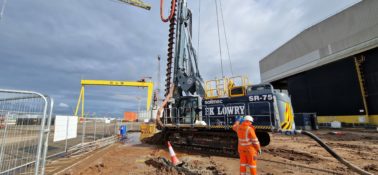
Rotary Bored Piles
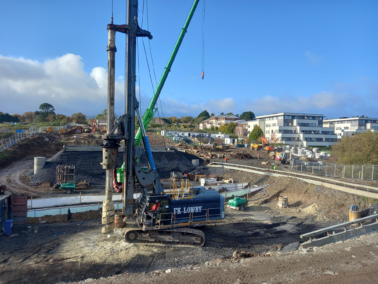
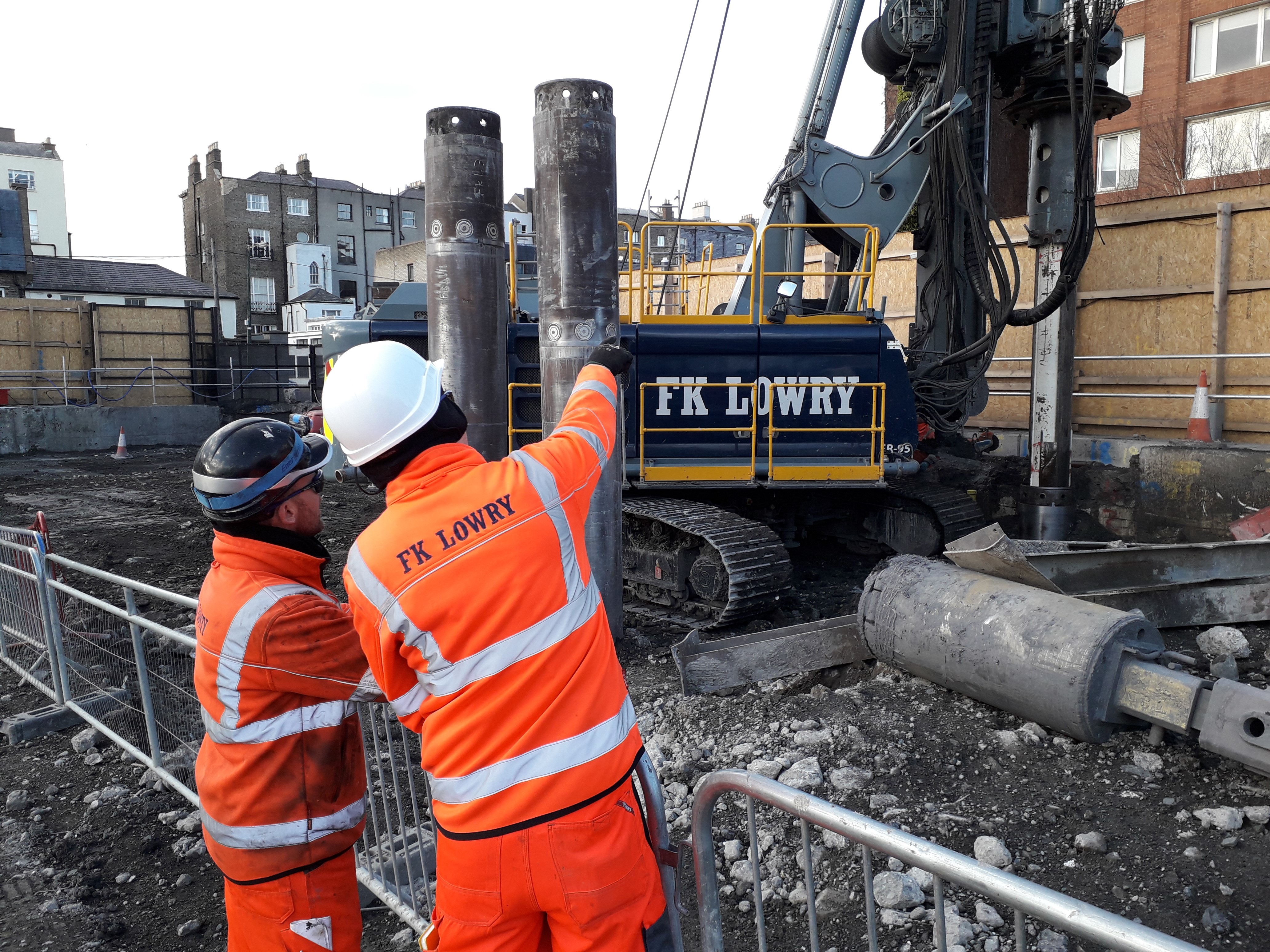
Large Diameter Rotary Bored piling involves drilling deep circular piles using specialist rotary bored piling rigs and tooling. The technique is designed for projects requiring high load capacities or deep foundation solutions.
This system is commonly used on major infrastructure, commercial and multi-storey developments where ground conditions or structural loading requirements demand robust foundation solutions.
Typical applications include:
- High-rise developments
- Bridge structures
- Infrastructure projects
- Energy sector developments
- Heavy industrial structures
Key Advantages
- High load carrying capacities
- Suitable for deep foundations
- Effective in difficult ground conditions
- Flexible pile diameters and depths
- Reduced vibration compared to driven solutions
- Suitable adjacent to existing structures
- Excellent structural performance
Capability Highlights
- Rotary bored casting/tool sizes ranging from 600mm dia up to 1600mm dia
- Soilmec SR-75 & SR-95 rotary piling rigs
- Ability to install piles in varying geological conditions
Continuous Flight Auger (CFA) Piling
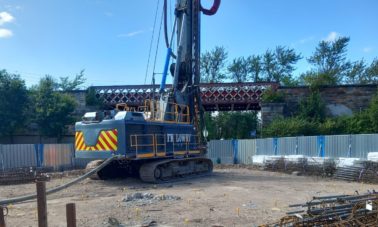
Continuous Flight Auger (CFA) piling is a high-production foundation solution installed using a continuous hollow stem auger. Concrete is pumped through the auger stem as the auger is withdrawn, before reinforcement is installed into the freshly concreted pile.
CFA piling is widely used across commercial, residential, industrial and infrastructure projects due to its speed, versatility and ability to operate in a wide range of ground conditions.
Typical applications include:
- Commercial developments
- Residential schemes
- Retaining structures
- Industrial units
- Infrastructure and transport projects
Key Advantages
- Fast and efficient installation process
- Low vibration and reduced noise
- Suitable for urban and restricted environments
- Excellent production rates
- Adaptable to varying ground conditions
- Cost-effective foundation solution
- Suitable for medium to high load applications
Capability Highlights
- CFA auger sizes from 350mm to 1200mm
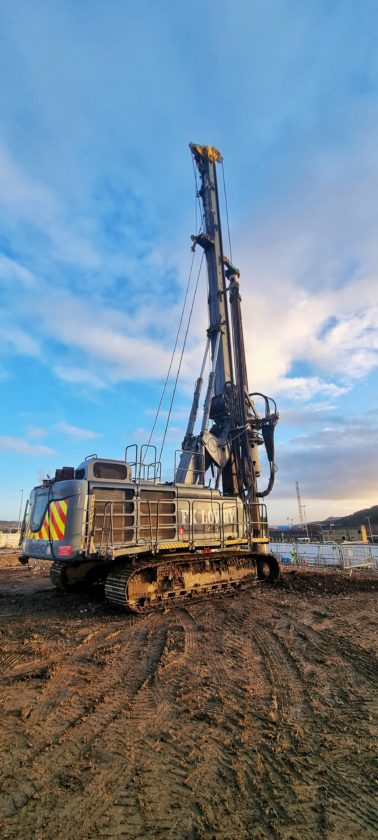
- Dedicated CFA piling rigs including Soilmec SF-65 & SR-75
- Experienced delivery teams across the UK and Ireland
- Latest Tier IV(f) compliant plant and equipment
Retaining Walls (Contiguous & Secant)
Continuous and secant piled walls are retaining solutions used to provide ground support and excavation stability for basements, infrastructure and deep excavations.
Contiguous walls utilise closely spaced piles, while secant walls use interlocking piles to create a continuous retaining barrier.
Typical applications include:
- Base construction
- Retaining structures
- Urban excavations
- Infrastructure projects
- Water-retaining structures
Key Advantages
- Effective excavation support
- Suitable for restricted sites
- Reduced ground movement
- Can provide temporary or permanent support
- Adaptable to varying ground conditions
- Suitable adjacent to existing buildings
- Excellent structural stability
Displacement Techniques
Driven Precast Concrete Piling
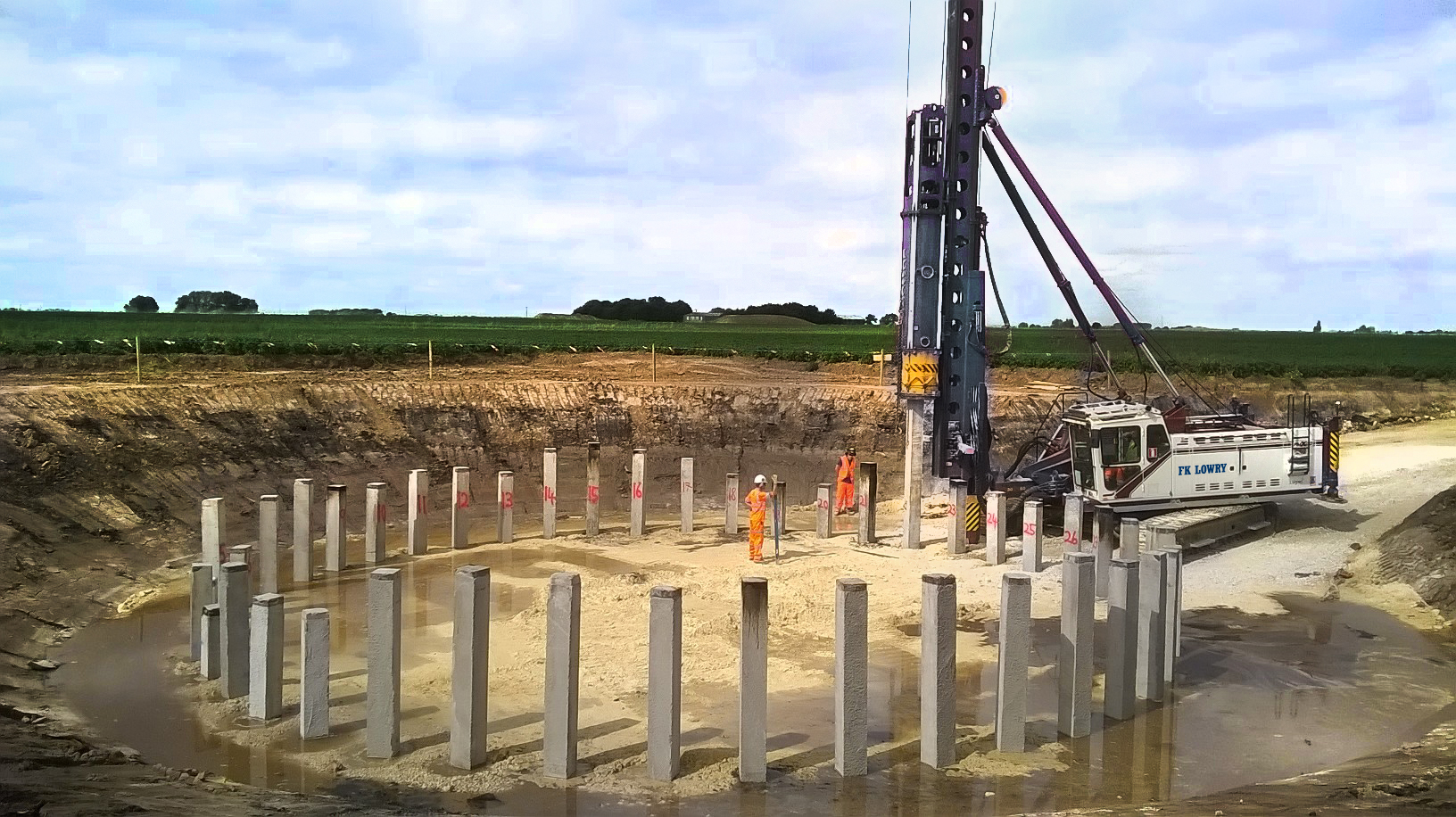
Driven precast concrete piling involves driving pre-manufactured reinforced concrete piles into the ground using specialist piling rigs.
This method provides a highly efficient displacement piling solution with excellent quality control and high structural performance.
Typical applications include:
- Industrial developments
- Warehousing
- Residential developments
- Infrastructure projects
- Marine and waterfront structures
Key Advantages
- High quality factory-produced piles
- Fast installation rates
- Minimal spoil generation
- Excellent durability
- Immediate load carrying capability
- Cost-effective solution for repetitive works
- Suitable for a wide range of ground conditions
Capability Highlights
- Dedicated Junttan driven piling rigs
- Precast pile sizes from 200mm to 350mm
- Extensive UK & Ireland project experience
- Integrated piling and precast expertise
Driven Steel Tube & H Sections
Driven steel tube and H section piling provides a versatile displacement piling solution capable of achieving high capabilities in difficult ground conditions.
This system is commonly used where deep penetration or high structural loads are required.
Typical applications include:
- Marine works
- Bridge structures
- Temporary works
- Industrial developments
- Restricted access projects
Key Advantages
- High structural strength
- Suitable for difficult ground conditions
- Rapid installation
- Reduced excavation spoil
- Excellent penetration capabilities
- Suitable for temporary or permanent works
Bored Displacement Piling
Bored displacement piling is a low-spoil piling technique that displaces the ground laterally during installation rather than removing it.
This system combines the benefits of displacement piling with reduced environmental impact and efficient installation rates.
Typical applications include:
- Residential developments
- Commercial projects
- Infrastructure works
- Environmentally sensitive sites
Key Advantages
- Minimal spoil generation
- Lower environmental impact
- Fast installation
- Improved ground compaction
- Reduced concrete usage
- Cost and programme efficiencies
- Suitable for constrained urban sites and contaminated soils
Capability Highlights
- Bored displacement pile sizes: 350mm & 450mm
- Specialist piling rigs and tooling
- Experience across multiple sectors
Marine Piling
Marine piling solutions are designed for projects located in or adjacent to water environments, including ports, harbours, jetties and waterfront infrastructure.
These works often require specialist plant, marine coordination and challenging installation conditions.
Typical applications include:
- Harbours and ports
- Waterfront developments
- Bridge structures
- Coastal infrastructure
- Marine retaining structures
Key Advantages
- Suitable for challenging marine environments
- High durability solutions
- Adaptable installation techniques
- Specialist equipment and expertise
- Long-term structural performance
Additional Services
Ground Improvement
Ground improvement techniques enhance the engineering properties of unsuitable soils to improve stability, settlement performance and load carrying capability.
These methods can provide cost-effective alternatives to deep foundations depending on project requirements and ground conditions.
Key Advantages
- Reduced foundation costs
- Improved bearing capacity
- Reduced settlement risk
- Programme efficiencies
- Sustainable engineering solution
Rigid Inclusions
Rigid inclusions are ground improvement elements installed to reduce settlement and improve load distribution within weak ground conditions.
This technique is increasingly used beneath industrial slabs, embankments and heavily loaded structures.
Key Advantages
- Reduced differential settlement
- Cost-effective alternative to deep piling
- High production rates
- Improved ground performance
- Reduced excavation requirements
- Suitable for poor ground conditions
Plant
Our plant investment also covers a wide range of quality equipment and fleet vehicles.